
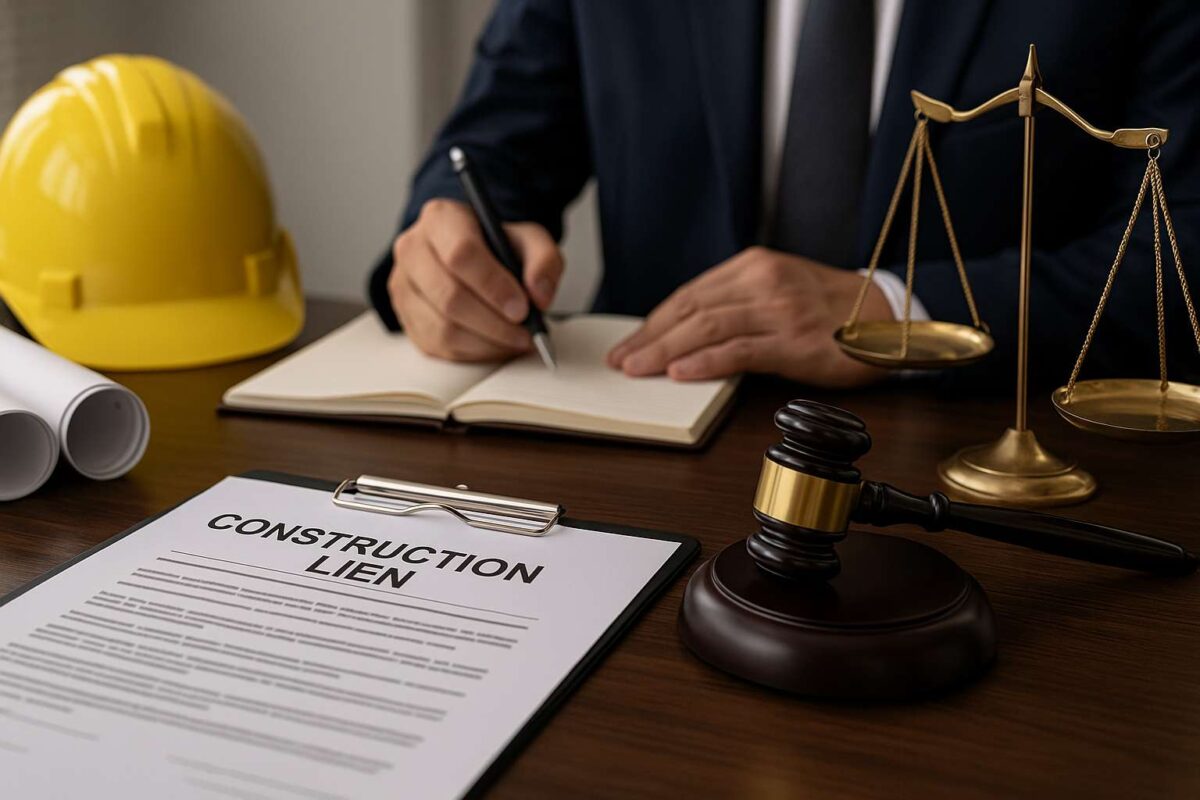
Each construction project in Florida may be a tripartite, multifunctional contract, and statutory requirements are strictly regulated. In the event of payment disputes, the state construction lien laws offer one of the legal avenues of obtaining payment. Construction lien processes and the exercise of lien rights are common topics found in legal materials such as https://bitman-law.com/construction-liens. These contents depict the statutory framework governing such claims. An attorney representing clients in construction liens in Florida usually operates within this framework to interpret the compliance requirements, the filing necessities, and the dispute resolution methods available under the law.
The Legal Foundation of Construction Liens in Florida
Construction liens in Florida are mainly regulated by Chapter 713 of the Florida Statutes. This statute defines the circumstances under which contractors, subcontractors, suppliers, and certain design professionals have the right to file a lien against property that has been improved, in case they have not received payments for their labor, services, or materials. In contrast to regular contract claims, a construction lien is a charge on the property itself, not just on the person who owes the money.
The rationale of the law is to provide a fair distribution of the competing interests. It recognizes, on one hand, the right of contractors and suppliers to be able to recover the value of the goods and services they have contributed to the improvement of the real estate. On the other hand, real estate owners are safeguarded through detailed notice and timing requirements that eliminate the possibility of unforeseen or concealed claims. Because a statute is interpreted literally, even a small slip-up in the formalities may result in the cancellation of a lien.
Who May Claim a Construction Lien?
Florida law outlines the people who have lien rights. In general, lienors are the people who have been physically or financially involved in the work on a property, i.e., general contractors, subcontractors, sub-subcontractors, material suppliers, laborers, and, in some cases, professional service providers such as architects, engineers, and surveyors. However, one’s eligibility to claim a lien is most of the time dependent on the contractual relationships and the fulfillment of the notice requirements set forth by the statutes.
A typical instance is that the parties who do not have a direct contract with the property owner are generally required to serve a Notice to Owner within a certain time frame. Not delivering the proper notice can be the cause of losing the right to put a lien on the property. A Florida construction lien lawyer often reviews the claimant’s adherence to the requirements stipulated by law before he initiates the filing process.
Key Deadlines and Procedural Requirements
The Florida construction lien law has strict deadlines for filing a lien. Normally, a lien has to be recorded within 90 days after the lienor stops providing labor, services, or materials. Figuring out the right date of the final furnishing is, in many cases, the main controversy, especially if minor retouching or warranty items are involved.
After a lien is recorded, the lien has to be served on the owner of the property within a certain timeframe. A lien is also valid for one year from the date of recording unless a complaint to foreclose the lien is filed earlier. Owners can shorten this time by filing a Notice of Contest of Lien or a complaint to show cause, which speeds up the enforcement process.
Court actions of this nature are mandatory and not at the discretion of the courts. There are countless instances where courts have outright rejected lien claims that have not been accurately compliant with the statutory requirements concerning formatting, service methods, or deadlines. Consequently, the right to a lien cannot be lawfully exercised without having been supported by scrupulous documentation and strict adherence to statutory language.
Enforcement and Dispute Resolution
File a foreclosure lawsuit, that’s a step the lienor can take if the payment still isn’t coming and a lien has been recorded. This lawsuit is a request to the court to allow the sale of the property to satisfy the unpaid amount. On the other hand, a foreclosure can usually be avoided if the parties can agree by negotiation, settlement, or bond transfer procedures.
Under Florida law, property owners have the right to move the lien from the real estate to a surety bond. Such a process changes the property security to financial security and, therefore, can enable construction projects or property sales to continue unhampered. If there is a question whether a lien is legitimate, too high, deceptive, or subject to transfer, then a Florida construction lien lawyer might be called upon to help determine this.
The Importance of Compliance and Documentation
The law rolls a heavy hand in making sure the legal papers are spot on in every step, right from preparation, filing, and serving. Even minor details such as descriptions of properties, affidavits, and notary acknowledgments must follow the statutory requirements strictly.
Since a construction project is a collection of various subcontractors and suppliers, it becomes very crucial to maintain payment records, contracts, change orders, and delivery confirmations that are regularly updated and accurate. The bulk of disagreements is typically linked to paperwork evidencing the performed work, the dates of furnishing, and the amounts owed.
If a person wants to completely understand construction liens in Florida, they will need to be familiar with the statute language, the time limits for various steps, and the way courts have interpreted it. Legal analyses of these issues are often a topic of professional debates and are featured in informational materials, including bitman-law.com, that look at the statutory framework in much more detail.
